

Vinyasa Yoga
Vinyasa Yoga is a dynamic style of yoga that connects breath with movement. Rather than holding each posture separately, practitioners move smoothly from one pose to another while coordinating each movement with the breath. This creates a flowing practice that can feel both energising and meditative.
The word “Vinyasa” is often associated with the idea of placing movements in a deliberate sequence. Unlike structured styles such as Bikram or traditional Ashtanga, which generally follow established sequences, Vinyasa Yoga offers greater flexibility. Teachers can create different sequences based on a particular theme, intention, pace, or level of experience.
This variety is one of the reasons Vinyasa Yoga has become so popular worldwide. One class may focus on strength and balance, while another may emphasise flexibility, relaxation, or mindful movement.
Understanding the origins of Vinyasa Yoga can provide a deeper appreciation of this evolving practice. Learning its meaning, principles, breathing techniques, and basic movements can also help beginners approach their practice with greater confidence.
Whether you are new to yoga or looking to develop your existing practice, exploring Vinyasa Yoga can be an enjoyable way to connect movement, breath, concentration, and mindfulness.
What Is Vinyasa (Flow Yoga)?
Modern Vinyasa Yoga, often called Flow Yoga, is a flexible style that connects yoga poses through smooth, breath-led movements. Unlike traditional Ashtanga Vinyasa, which follows a structured series of postures, Vinyasa allows teachers to create sequences that suit the theme, pace, and needs of each class.
Many Vinyasa Flow classes draw inspiration from the Ashtanga tradition. A session may begin with Sun Salutations, such as Surya Namaskar A and B, before moving into standing poses, balancing postures, twists, backbends, or other sequences. Some classes may also finish with calming postures and relaxation.
One of the defining features of Vinyasa Yoga is that there is no single fixed sequence. Every class can offer a different combination of poses, making the practice adaptable and engaging. Students can explore postures inspired by different Ashtanga series without necessarily following the traditional sequence or intensity.
This freedom makes Vinyasa Yoga suitable for people with different experience levels. Beginners can work with simpler transitions, while experienced practitioners can explore more challenging movements. By combining breath, movement, concentration, and mindful transitions, Vinyasa creates a flowing practice that supports both physical awareness and mental focus.
What Does Vinyasa Mean?
The word “Vinyasa” comes from Sanskrit and combines “Vi,” meaning “in a special way,” with “Nyasa,” which can mean “to place,” “special order,” or “attention.” In yoga, Vinyasa can therefore be understood as moving or placing the body with intention and awareness.
Vinyasa describes the conscious progression from one asana to another, with movement coordinated with the breath. In many practices, transitions may include movements such as Chaturanga, Upward-Facing Dog, and Downward-Facing Dog. However, a vinyasa does not have to follow a specific sequence.
The flowing movements help create rhythm, build warmth, develop strength, and prepare the body for the next posture. In Vinyasa Flow classes, teachers often arrange poses from simpler movements to more challenging ones while introducing a specific intention for the session.
At its heart, Vinyasa Yoga is about creating a stronger connection between body, breath, and mind. By moving consciously and maintaining awareness throughout the practice, each sequence becomes a purposeful and mindful experience.
Hatha vs Vinyasa Yoga – What’s the Difference?
Hatha Yoga and Vinyasa Yoga share many traditional postures, breathing techniques, and mindfulness practices, so it is easy to confuse the two. The main difference, however, is the pace and way the poses are practised.
Traditional Hatha Yoga generally involves holding individual asanas for a longer period. This slower approach gives practitioners more time to focus on posture, alignment, breathing, and body awareness. It can be a good choice for those who prefer a calm and steady practice.
Vinyasa Yoga, on the other hand, connects one pose to the next through smooth, continuous movements. The transitions are coordinated with the breath, creating a flowing sequence that can feel more dynamic and energetic. Classes may vary in pace and sequence depending on the teacher and the intention of the session.
Despite these differences, both Hatha and Vinyasa Yoga encourage a connection between the body, breath, and mind. Both can include controlled breathing, concentration, mindful movement, and proper alignment.
Ultimately, the choice between Hatha and Vinyasa depends on your preferences and goals. If you enjoy slower, focused movements, Hatha may suit you. If you prefer continuous movement and variety, Vinyasa Yoga may be a better fit.

Where Did Vinyasa Yoga Originate?
Vinyasa Yoga, also known as Vinyasa Flow, is a modern style of yoga rather than a traditional system with one fixed lineage or a single founding teacher. Its development is closely connected to the Ashtanga Vinyasa tradition and the teachings of Sri Krishnamacharya.
Krishnamacharya placed strong importance on the relationship between movement and breath. He taught that the transition between yoga poses was just as meaningful as the posture itself. Instead of treating each asana as a separate position, his approach encouraged practitioners to maintain steady breathing, awareness, and mindful movement throughout the entire practice.
These ideas helped shape the flowing style associated with Vinyasa Yoga today. Over time, teachers and practitioners adapted the principles into more flexible sequences, allowing classes to vary in pace, structure, and focus.
Unlike some traditional yoga systems, Vinyasa does not follow one fixed sequence. Its open and creative nature has allowed it to evolve across different teachers and yoga communities while retaining its central focus on connecting breath, movement, and awareness.
Characteristics of Vinyasa Yoga (Flow Yoga)
Vinyasa Yoga is known for its smooth movements, breath awareness, and creative sequences. Unlike slower styles that focus on holding one posture for a longer time, Vinyasa creates a continuous flow between poses. Here are some of its key characteristics:
1. Linking Poses Through Movement
In Vinyasa Yoga, one asana naturally transitions into another. The poses are connected rather than practised as separate movements, which is why this style is often called Flow Yoga. The continuous movement creates a rhythmic and engaging practice.
2. Breath and Movement
Breathing plays an important role in Vinyasa. Each movement is coordinated with an inhale or exhale, helping practitioners maintain awareness and control. Many classes also incorporate Ujjayi breathing, often called Ocean Breath, to create a steady rhythm during practice.
3. Dynamic Flow and Pace
Vinyasa can be physically demanding because of its continuous movements and changing pace. Depending on the sequence, it may increase body warmth, challenge muscular endurance, and provide an active workout.
4. Flexible and Varied Sequences
There is no single fixed sequence in Vinyasa Yoga. Teachers can create different combinations of poses based on the class theme, experience level, and desired intensity. This means each session can feel different and engaging.
5. Moving Meditation
Vinyasa encourages concentration by combining breath, movement, and awareness. With consistent focus, the flowing practice can become a form of moving meditation, helping practitioners stay present throughout the session.
6. Focus and Mind-Body Connection
Maintaining awareness during transitions encourages a deeper connection between the body and mind. Focusing on breathing, alignment, movement, or a chosen point of attention can make the practice more mindful and purposeful.
How to Practice Vinyasa Yoga
Vinyasa Yoga is a flowing practice that connects movement with breath. Unlike a slower Hatha Yoga session, Vinyasa often involves continuous transitions between poses, making the practice more dynamic and physically engaging. The pace can be adjusted according to your experience and comfort level.
For many Vinyasa classes, Sun Salutations form the foundation of the practice. Surya Namaskar A and B are commonly used at the beginning to gently warm up the body and prepare the muscles for movement. They may also be repeated throughout the session to connect different sequences and postures.
A typical Vinyasa practice can include standing poses, balancing postures, twists, backbends, stretches, and relaxation. The focus should remain on maintaining steady breathing while moving with awareness.
If you are new to Vinyasa Yoga, start with a beginner-friendly class and learn the basic transitions before increasing the pace. Practising regularly can help you develop better body awareness, flexibility, strength, and concentration while making each session feel more natural and enjoyable.
Vinyasa Yoga Poses & Transitions
Vinyasa Yoga is all about creating a smooth connection between one pose and the next. A “vinyasa” commonly refers to a flowing sequence that links movement with the breath. When a teacher says, “Take a vinyasa,” students usually move through a familiar series of postures.
Traditional Vinyasa Sequence
From Plank Pose, you typically:
- Lower into Chaturanga Dandasana (Four-Limbed Staff Pose).
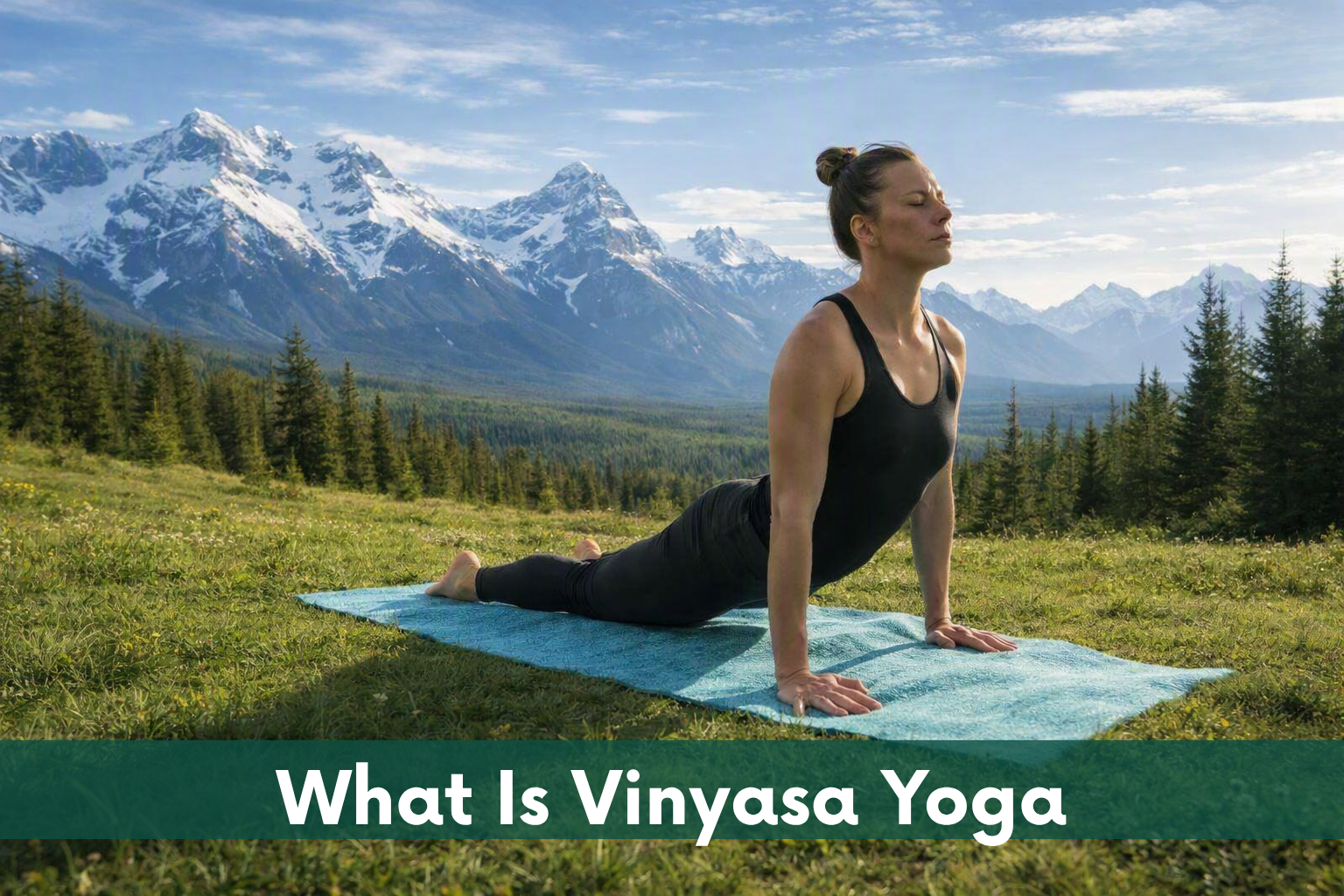
- Inhale and move into Urdhva Mukha Svanasana (Upward-Facing Dog).
- Exhale and transition into Adho Mukha Svanasana (Downward-Facing Dog).
When transitioning from a seated posture, you may lift into Upward-Facing Dog, jump or step the feet back to Plank, lower through Chaturanga, and return to Downward-Facing Dog.
This sequence is strongly associated with Ashtanga Vinyasa Yoga and the teachings of K. Pattabhi Jois. However, modern Vinyasa Flow classes often adapt these movements to suit different abilities and intentions.
Creating Variations in Vinyasa Flow
Vinyasa sequences do not have to follow one fixed pattern. Teachers can replace traditional poses with alternatives, creating a more accessible, strengthening, or creative practice.
For example:
- Chair Pose: Malasana (Garland Pose) or Revolved Chair Pose
- Chaturanga: Low Plank, Eight-Limbed Pose, or Sleeping Pigeon
- Upward-Facing Dog: Cobra, Melting Heart, Locust, or Bow Pose
- Warrior I: Warrior II, Crescent Moon, Triangle, or Side-Angle Pose
- Downward-Facing Dog: Child’s Pose, Hare Pose, Dolphin, or Forearm Stand
The beauty of Vinyasa Yoga is its flexibility. By coordinating breath, movement, and mindful transitions, practitioners can create a flowing sequence that feels both purposeful and natural.

Breathing Exercises in Vinyasa Yoga
Breathing plays an important role in Vinyasa Yoga, helping create a steady connection between movement and mindfulness. During the flowing sequences, practitioners coordinate each movement with the breath, creating a smooth and rhythmic practice. Teachers may use a five-breath count for each asana to help students maintain a consistent pace.
A common breathing technique used in Vinyasa Flow is Ujjayi, often called Ocean Breath. Although it is inspired by Ujjayi breathing, the technique used during Vinyasa may differ from traditional Ujjayi Pranayama.
How to Practice Ujjayi Breathing
Follow these simple steps:
- Breathe through your nose: Inhale gently while keeping your mouth closed and slightly narrowing the back of your throat.
- Create a soft sound: Your breathing should produce a quiet, ocean-like sound. Keep your jaw, mouth, and throat relaxed without forcing the breath.
- Keep the breath smooth: Avoid making the sound too loud or strained. Focus on slow, comfortable breathing throughout your practice.
- Coordinate breath and movement: Allow your breathing to guide transitions between Vinyasa Yoga poses.
When practiced comfortably, mindful breathing can improve concentration, encourage relaxation, and help you stay present throughout your Vinyasa Yoga session.

Final Thoughts
Vinyasa Yoga offers a beautiful way to connect movement, breath, and mindfulness. Each flowing sequence encourages you to stay present rather than focus on achieving perfect poses. As you move from one asana to another, your breath becomes a steady guide, creating a sense of calm and awareness.
With regular Vinyasa Yoga practice, you can develop greater focus, balance, and body awareness while learning to move through life with more ease. Every session is an opportunity to slow down, listen to yourself, and embrace the present moment.
Ready to experience the benefits of mindful movement and breath? Join Amantrhit for a transformative Vinyasa Yoga experience and begin your journey toward greater balance and inner harmony.
Frequently Asked Questions About Vinyasa Yoga
1.What type of yoga is Vinyasa??
Vinyasa is a dynamic style of yoga that connects physical postures through smooth, continuous movements. Breath is coordinated with each transition, creating a flowing practice often described as “Flow Yoga.”
2.Is Vinyasa Yoga OK for beginners?
Yes, beginners can practice Vinyasa Yoga. However, some classes can be physically demanding. Beginners should start with a slower or beginner-friendly class and gradually build strength, flexibility, and confidence.
3.Is Vinyasa good for weight loss?
Vinyasa Yoga can support weight management because its continuous movements increase physical activity and energy expenditure. When combined with a balanced diet and regular exercise, it can be part of a healthy weight-management routine.
4.What's the difference between Vinyasa and Hatha Yoga?
The main difference is pace. Hatha Yoga generally involves holding poses for longer periods, while Vinyasa Yoga links poses together in a flowing sequence synchronized with the breath.
5.Which is harder, Vinyasa or Ashtanga?
It depends on the class and your experience. Ashtanga follows a more structured and physically demanding sequence, while Vinyasa offers greater variety and can range from gentle to highly challenging.
6.What are the 5 pillars of Vinyasa Yoga?
The five commonly emphasized principles are breath, movement, alignment, awareness, and intention. Together, they help create a mindful practice where the body, breath, and mind work together
7. How many times a week should I do Vinyasa Yoga?
For most people, practicing Vinyasa Yoga 2–4 times per week can provide a good balance between progress and recovery. Beginners may start with two sessions weekly and increase gradually.
8.How many calories does 30 minutes of Vinyasa Yoga burn?
Calorie expenditure varies according to body weight, practice intensity, fitness level, and pace. A vigorous 30-minute Vinyasa session generally burns more calories than a slow, restorative yoga practice.
9. What is a basic Vinyasa Yoga sequence?
A basic sequence often includes Plank → Chaturanga Dandasana → Upward-Facing Dog → Downward-Facing Dog. The movements are coordinated with inhalations and exhalations to create a smooth transition between poses.
10.What are the poses in Vinyasa Yoga?
Vinyasa Yoga does not have one fixed set of poses. Common postures include Downward-Facing Dog, Upward-Facing Dog, Chaturanga, Plank, Warrior I and II, Triangle Pose, Chair Pose, lunges, twists, and forward folds. The sequence can change depending on the teacher and class level.

Amantrhit Wellness Retreat Center
Amantrhit is an ISO and Yoga Alliance certified wellness retreat center in Rishikesh, offering Ayurveda, yoga, meditation, Panchakarma, weight loss retreats & other holistic healing programs. Amantrhit is a 5-star rated retreat center with several years of wellness experience, 100+ happy Guests, and 1000+ trusted wellness seekers worldwide. Whether you want to relax, heal, detox, or reconnect with yourself, Amantrhit provides a peaceful and supportive space to begin your wellness journey. Our experienced doctors and certified therapists guide guests. we also serve organic sattvik meals and serene surroundings restore balance to body, mind, and spirit. Come as you are, and leave feeling lighter, clearer, and deeply restored.


Leave a Reply