

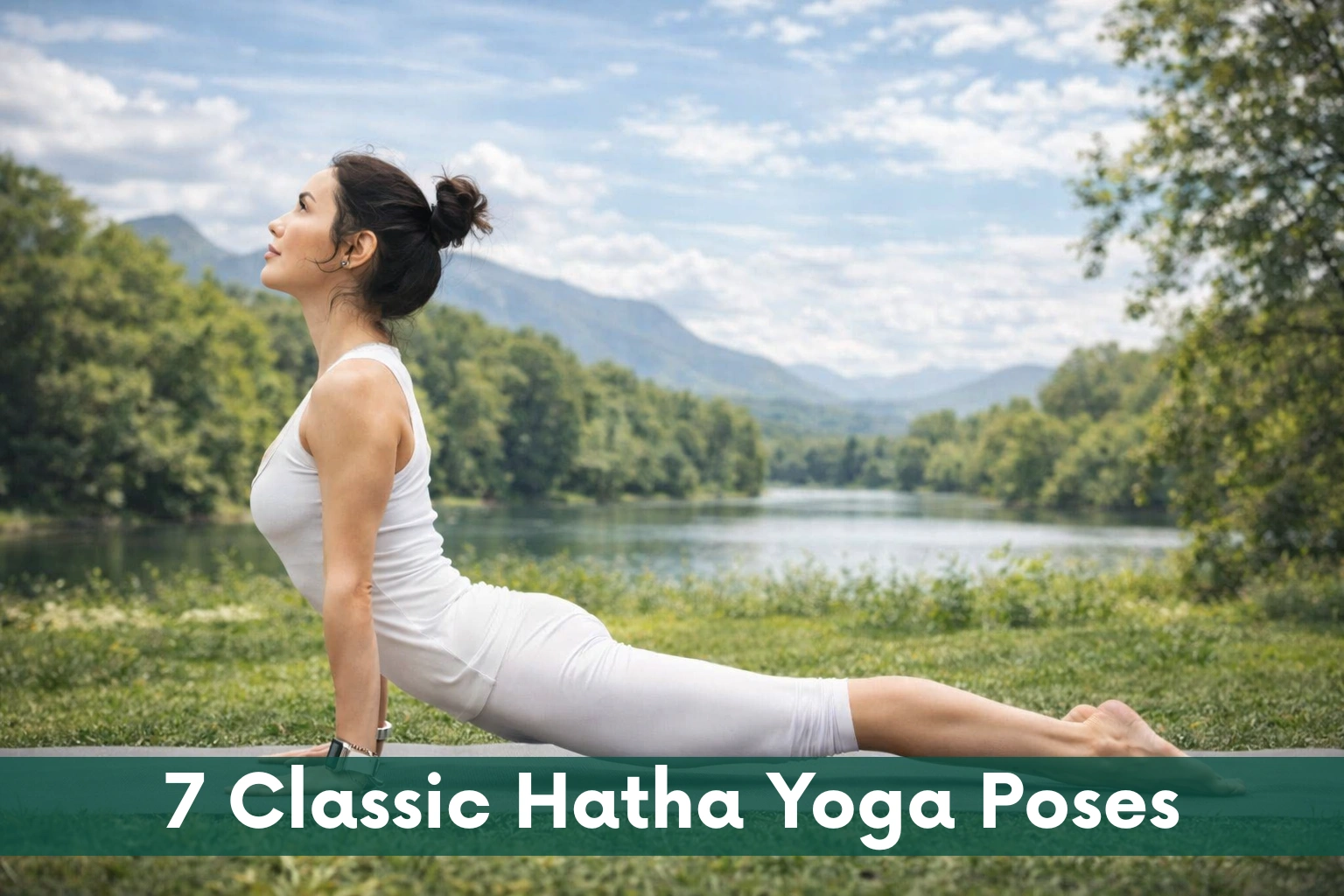
7 Classic Hatha Yoga Poses
Hatha Yoga is one of the oldest and most widely practised forms of yoga, forming the foundation of many modern yoga styles. Today, the term “Hatha Yoga” is commonly used for gentle yoga classes, but traditional Hatha Yoga is much more than a slow-paced workout. It is a holistic practice that combines physical postures (asanas), breathing techniques (pranayama), meditation, and mindfulness to create balance between the body and mind.
Many modern yoga classes blend Hatha principles with flowing sequences, often focusing on continuous movement rather than holding postures for extended periods. In contrast, classical Hatha Yoga emphasises slower, deliberate movements and longer-held poses, allowing practitioners to improve strength, flexibility, posture, concentration, and inner awareness. The goal is not only physical fitness but also mental clarity, emotional stability, and spiritual growth.
Whether you are a beginner or an experienced yogi, traditional Hatha Yoga provides a strong foundation for developing proper alignment, controlled breathing, and a deeper connection with yourself. By practising each posture mindfully and maintaining steady breath, you can experience greater relaxation, reduced stress, improved flexibility, and enhanced overall well-being. In this guide, we’ll explore what traditional Hatha Yoga is, how it differs from modern yoga styles, and the essential poses that form the core of this timeless practice.
What is Hatha Yoga?
Traditional Hatha Yoga is one of the oldest and most respected forms of yoga, with roots dating back thousands of years in ancient India. Practised worldwide today, it remains popular because of its holistic approach to improving physical health, mental clarity, and spiritual well-being. Classical texts such as the Hatha Yoga Pradipika describe Hatha Yoga as a complete discipline that combines physical postures (asanas), breathing techniques (pranayama), meditation (dhyana), and mindful living to create harmony between the body and mind.
Unlike many modern yoga styles that focus on continuous movement, traditional Hatha Yoga encourages practitioners to hold postures for longer periods. This slower approach helps improve strength, flexibility, balance, and concentration while promoting relaxation and inner awareness. Controlled breathing and meditation are integrated into each session, allowing practitioners to calm the mind, reduce stress, and develop greater emotional resilience.
Traditional Hatha Yoga also emphasises discipline, patience, self-awareness, healthy lifestyle choices, and ethical living as essential parts of the practice. According to yogic philosophy, the practice helps balance the body’s subtle energy system, including the chakras and energy channels (nadis), supporting overall vitality and inner peace. By preparing both the body and mind, Hatha Yoga creates the ideal foundation for deeper meditation, mindfulness, and personal growth, making it suitable for practitioners of all ages and experience levels.
Hatha Yoga Pradipika Asanas (Postures)
Asanas (yoga postures) are the foundation of traditional Hatha Yoga, helping develop physical strength, flexibility, stability, and mental focus. Ancient yogic texts, including the Hatha Yoga Pradipika, describe several important postures that support overall health and prepare the body for breathwork and meditation. While many yoga poses exist today, a few are considered especially beneficial for building a strong practice. Below are seven essential Hatha Yoga poses that you can easily incorporate into your daily yoga routine.
1. Gomukhasana – Cow Face pose
Gomukhasana, or Cow Face Pose, is a traditional Hatha Yoga posture that improves flexibility, posture, and joint mobility. In this pose, the legs are crossed with the knees stacked while the arms reach behind the back to clasp each other, creating a shape that resembles a cow’s face.
Benefits of Gomukhasana include:
- Improves flexibility in the shoulders, chest, hips, and thighs.
- Stretches the spine and encourages better posture.
- Helps relieve stiffness in the shoulders and may ease mild sciatica discomfort.
- Strengthens the back, arms, ankles, and hip muscles.
- Stimulates the kidneys and pelvic region, supporting overall body function.
- Promotes relaxation, helping reduce stress and anxiety through mindful breathing.
Although Gomukhasana offers many benefits, the full posture may be challenging for beginners or those with limited flexibility. Using a yoga strap, cushion, or modified arm and leg positions allows practitioners to perform the pose safely while gradually improving mobility. With regular practice, Gomukhasana enhances balance, body awareness, and flexibility, making it an excellent addition to any Hatha Yoga routine. Always practise within your comfort level and seek guidance from a qualified yoga instructor if needed.

2. Paschimottanasana – Seated Forward Bend pose
Paschimottanasana, or Seated Forward Bend, is a classic Hatha Yoga posture that promotes flexibility, relaxation, and overall well-being. The pose is performed by sitting with both legs extended straight in front of you, gently folding forward from the hips, and reaching toward your feet while keeping the spine as long as possible. The forehead moves toward the knees without forcing the stretch.
Benefits of Paschimottanasana include:
- Deeply stretches the hamstrings, calves, spine, shoulders, and neck.
- Improves flexibility and encourages better posture.
- Calms the nervous system, helping reduce stress and anxiety.
- Supports healthy digestion by gently massaging the abdominal organs.
- Stimulates the kidneys and improves blood circulation.
- May help relieve menstrual discomfort and ease menopause-related symptoms.
- Encourages relaxation and can promote better sleep when practised regularly.
This pose should be performed slowly with steady breathing, avoiding excessive strain. Beginners can bend their knees slightly or use a yoga strap to make the posture more comfortable while gradually improving flexibility and body awareness.

3. Kurmasana – Tortoise pose
Kurmasana, or Tortoise Pose, is a traditional Hatha Yoga posture that encourages deep relaxation, flexibility, and inner focus. While the classical version described in ancient yogic texts differs from the modern variation, today’s Kurmasana involves extending the arms beneath the legs while folding the torso forward, creating a gentle, grounding stretch.
Benefits of Kurmasana include:
- Deeply stretches the hamstrings, hips, shoulders, chest, and spine.
- Improves flexibility in the back and lengthens the spinal muscles.
- Helps release tension in the shoulders, neck, and lower back.
- Encourages better posture and greater hip mobility.
- Calms the nervous system, promoting relaxation and mental clarity.
- Supports mindful breathing and enhances body awareness.
Kurmasana is best practised slowly and within your comfort level. Beginners can modify the pose by bending the knees slightly or using yoga props for support. With regular practice, this pose helps improve flexibility, balance, and overall physical and mental well-being, making it a valuable addition to a traditional Hatha Yoga routine.

4. Dhanurasana – Full Bow pose
Dhanurasana, or Bow Pose, is a powerful Hatha Yoga posture that strengthens the body while improving flexibility and posture. The pose is performed by lying on the stomach, bending the knees, holding the ankles with the hands, and gently lifting the chest and thighs off the floor to create the shape of a drawn bow.
Benefits of Dhanurasana include:
- Strengthens the back, legs, shoulders, and core muscles.
- Improves spinal flexibility and encourages better posture.
- Opens the chest, shoulders, and hips while stretching the front of the body.
- Stimulates the spine and helps improve mobility.
- Gently massages the abdominal organs, including the liver, pancreas, and digestive system.
- Supports healthy digestion and may help relieve mild digestive discomfort.
- Boosts energy levels, improves circulation, and enhances overall body awareness.
Practise Dhanurasana with slow, controlled breathing and avoid overstretching. Beginners can use a yoga strap or perform a modified version until flexibility and strength improve. Regular practice helps build a stronger, more flexible body while supporting overall physical and mental well-being.

5. Matsyendrasana – Half Lord of the Fishes pose
Matsyendrasana, or Half Lord of the Fishes Pose, is a classic seated spinal twist in Hatha Yoga that improves flexibility, spinal mobility, and digestive health. The pose is performed by crossing one leg over the other and gently twisting the torso while maintaining an upright spine and steady breathing.
Benefits of Matsyendrasana include:
- Improves flexibility and mobility of the spine.
- Strengthens and stretches the back, shoulders, and neck muscles.
- Encourages better posture and spinal alignment.
- Gently massages the abdominal organs, supporting healthy digestion.
- Stimulates the liver, kidneys, and adrenal glands for improved organ function.
- Helps relieve stiffness in the hips and lower back.
- Promotes relaxation, improves body awareness, and reduces muscle tension.
Practise Matsyendrasana slowly without forcing the twist, keeping the spine long throughout the movement. Beginners can perform a gentle variation while gradually increasing flexibility. Regular practice helps improve balance, posture, digestion, and overall physical and mental well-being, making it an excellent addition to any Hatha Yoga routine.

6. Bhadrasana – Gracious or Auspicious Pose
Bhadrasana, also known as Gracious Pose or Auspicious Pose, is a traditional seated Hatha Yoga posture that promotes stability, relaxation, and mindfulness. The pose is performed by bringing the soles of the feet together, allowing the knees to fall outward, and sitting upright with the spine straight while maintaining steady, comfortable breathing.
Benefits of Bhadrasana include:
- Gently stretches the thighs, hips, groin, and lower back.
- Improves posture and encourages proper spinal alignment.
- Supports healthy digestion and may help relieve constipation, acidity, and bloating.
- Promotes flexibility in the hips and pelvic region.
- Stimulates the abdominal and reproductive organs, supporting overall wellness.
- Encourages calmness, mental focus, and deep relaxation.
- Provides a comfortable seated position for meditation and breathing exercises.
Bhadrasana is suitable for practitioners of all experience levels and is often used during meditation and pranayama practice. Regular practice helps improve flexibility, body awareness, and inner balance while preparing the mind and body for deeper states of relaxation and mindfulness.

7. Savasana – Corpse pose
Savasana, or Corpse Pose, is the final relaxation posture in most Hatha Yoga sessions and is essential for allowing the body and mind to absorb the benefits of the practice. It is performed by lying comfortably on the back with the arms and legs relaxed, the eyes closed, and the breath flowing naturally. Ideally, the pose is held for 5–10 minutes, often accompanied by gentle guided meditation or calming music.
Benefits of Savasana include:
- Promotes deep physical and mental relaxation.
- Calms the nervous system and reduces stress and anxiety.
- Helps relieve fatigue, muscle tension, and headaches.
- Encourages mindful breathing and emotional balance.
- May improve sleep quality and support relief from insomnia.
- Helps lower blood pressure and promotes overall well-being.
Even if time is limited, spending just a few minutes in Savasana with slow, deep breathing can help restore energy and leave you feeling calm and refreshed. This simple yet powerful pose completes your yoga practice by encouraging complete relaxation, mindfulness, and inner peace.
Frequently Asked Questions About Hatha Yoga Poses
1.What is Hatha Yoga vs other styles?
Hatha Yoga is a traditional branch of yoga that includes physical postures, breathwork, and meditation. Compared with faster styles like Vinyasa or Ashtanga, Hatha Yoga is usually slower, steadier, and more focused on alignment, breath, and holding poses with awareness.
2. What are the basic Hatha Yoga poses for beginners?
Basic Hatha Yoga poses for beginners include Mountain Pose, Standing Forward Fold, Downward Facing Dog, Warrior II, Triangle Pose, Tree Pose, Cobra Pose, Bridge Pose, and Savasana. These foundational Hatha poses help build strength, flexibility, balance, posture, and body awareness.
3.How long should I hold each Hatha pose?
In a beginner Hatha Yoga class, you might hold each pose for 3–5 breaths, while more traditional Hatha practices may hold postures longer to build focus, strength, and energetic awareness. The best length depends on your body, breath, and experience level, so the pose should feel steady and sustainable rather than forced.
4. Is Hatha Yoga good for weight loss?
Hatha Yoga can support weight loss by building strength, improving mobility, lowering stress, and helping you become more consistent with movement. It may not burn calories as quickly as a vigorous Vinyasa or power yoga class, but it can be a sustainable part of a balanced fitness and wellness routine.
5.Can I practice Hatha Yoga every day?
Yes, many people can practice Hatha Yoga every day because it is generally slower and more adaptable than intense workout-style yoga. To practice safely, vary the intensity, include rest or restorative poses, and listen to your body instead of pushing through pain or fatigue.
6.What’s the difference between Hatha and Vinyasa?
Hatha Yoga is usually slower, with poses held for several breaths and more emphasis on alignment, breath, and stillness. Vinyasa Yoga links movement with breath in a flowing sequence, so it often feels more dynamic, cardiovascular, and fast-paced than a traditional Hatha class.
7. How long does it take to feel benefits from Hatha Yoga?
Many people feel calmer, more grounded, and more open after just one Hatha Yoga class. With consistent practice over a few weeks, you may notice deeper benefits such as improved flexibility, strength, posture, balance, breath awareness, and stress relief.

Amantrhit Wellness Retreat Center
Amantrhit is an ISO and Yoga Alliance certified wellness retreat center in Rishikesh, offering Ayurveda, yoga, meditation, Panchakarma, weight loss retreats & other holistic healing programs. Amantrhit is a 5-star rated retreat center with several years of wellness experience, 100+ happy Guests, and 1000+ trusted wellness seekers worldwide. Whether you want to relax, heal, detox, or reconnect with yourself, Amantrhit provides a peaceful and supportive space to begin your wellness journey. Our experienced doctors and certified therapists guide guests. we also serve organic sattvik meals and serene surroundings restore balance to body, mind, and spirit. Come as you are, and leave feeling lighter, clearer, and deeply restored.


Leave a Reply