

Mudras in Yoga—The Meaning and Science behind it
During yoga and meditation, you may notice practitioners placing their hands in specific positions, such as joining the palms in a prayer pose before Surya Namaskar or gently touching the thumb and index finger together while meditating. These intentional hand gestures are known as mudras, an essential part of traditional yoga that has been practised for centuries. More than simple hand positions, mudras are believed to direct the body’s energy flow, enhance concentration, and promote physical, mental, and spiritual well-being.
Each mudra has a unique purpose and is associated with different elements, chakras, and healing benefits. Regular practice can help improve focus, reduce stress, encourage emotional balance, support better breathing, and deepen meditation. Many yoga practitioners also use mudras to activate specific chakras, restore inner harmony, and strengthen the mind-body connection.
Whether you are a beginner or an experienced yogi, incorporating mudras into your daily routine can enrich your yoga and meditation practice. In this guide, you’ll learn what mudras are, why they are important in yoga, how they support chakra balancing, and discover some of the most effective mudras for improving overall health, mindfulness, and inner peace.
What are Mudras in Yoga?
Mudras are symbolic hand gestures, body postures, or subtle energy seals used in yoga and meditation to direct the flow of prana, or life force energy, throughout the body. The word mudra comes from Sanskrit and means “seal” or “gesture.” While there are several types of mudras, including Hasta Mudras (hand gestures), Kaya Mudras (body gestures), and Citta Mudras (mental or consciousness gestures), hand mudras are the most commonly practised because they are simple, effective, and easy to incorporate into daily yoga and meditation.
Ayurveda and Mudras
According to Ayurveda, the human body is composed of five natural elements—fire, air, space, earth, and water. Good health depends on maintaining a balance between these elements, while any imbalance can contribute to physical, emotional, or mental discomfort. Each finger represents one of these five elements, and practising specific mudras is believed to regulate the flow of prana associated with each element, helping restore harmony within the body.
The five fingers correspond to the elements as follows:
- Thumb – Represents the Fire element
- Index Finger – Represents the Air element
- Middle Finger – Represents the Space (Ether) element
- Ring Finger – Represents the Earth element
- Little Finger (Pinky) – Represents the Water element
By gently joining or positioning the fingers in specific ways, mudras are thought to influence energy pathways, activate chakras, improve concentration, reduce stress, and support overall physical and emotional well-being. Regular practice of mudras alongside yoga and meditation can enhance mindfulness, encourage inner balance, and promote holistic healing, making them a valuable addition to any wellness routine.
The Five Pranas
According to yoga and Ayurveda, the body is powered by five vital life energies, known as the Pancha Pranas, which regulate essential physical, mental, and emotional functions. When these energies are balanced, they promote better health, improved vitality, and overall well-being. Regular yoga, pranayama, and mudra practices help harmonise these life forces.
The five pranas include:
- Prana – Controls breathing, heart function, and the intake of vital energy.
- Apana – Regulates elimination processes such as urination, sweating, and bowel movements.
- Samana – Supports digestion, metabolism, and the absorption of nutrients.
- Vyana – Governs blood circulation, muscle movement, and the distribution of energy throughout the body.
- Udana – Influences speech, memory, thinking, balance, and upward movements, including eye and facial functions.
Maintaining harmony among the five pranas is believed to enhance physical health, improve mental clarity, boost energy levels, and deepen your yoga and meditation practice.
Five Mudras for Meditation and Yoga
Mudras are powerful hand gestures used in yoga and meditation to balance the body’s energy and promote harmony between the mind and body. According to yogic philosophy, the right side of the body represents solar (Pingala) energy, while the left side represents lunar (Ida) energy. Certain mudras help connect and balance these energy channels, enhancing the flow of prana throughout the body. They also improve concentration, encourage mindfulness, and deepen meditation.
Some of the most commonly practised mudras include:
- Namaskar Mudra – Promotes balance, gratitude, and inner peace.
- Gyana Mudra – Enhances focus, wisdom, and mental clarity.
- Chin Mudra – Supports relaxation and deeper meditation.
- Vayu Mudra – Helps balance the air element and calm the nervous system.
Regular practice of these mudras can improve physical, mental, and spiritual well-being while enriching your yoga journey. Below, we explore these yoga and meditation mudras in more detail.
1. Namaskar Mudra
Namaskar Mudra is performed by bringing the palms and fingers together in a prayer position at the centre of the chest, near the heart. This simple yet powerful yoga mudra helps balance the body’s energy, unite the five elements, and harmonise the left and right sides of the body. Widely used in yoga and meditation, Namaskar Mudra encourages inner peace, compassion, gratitude, and mental calmness while improving focus and promoting emotional balance.

2. Chin Mudra
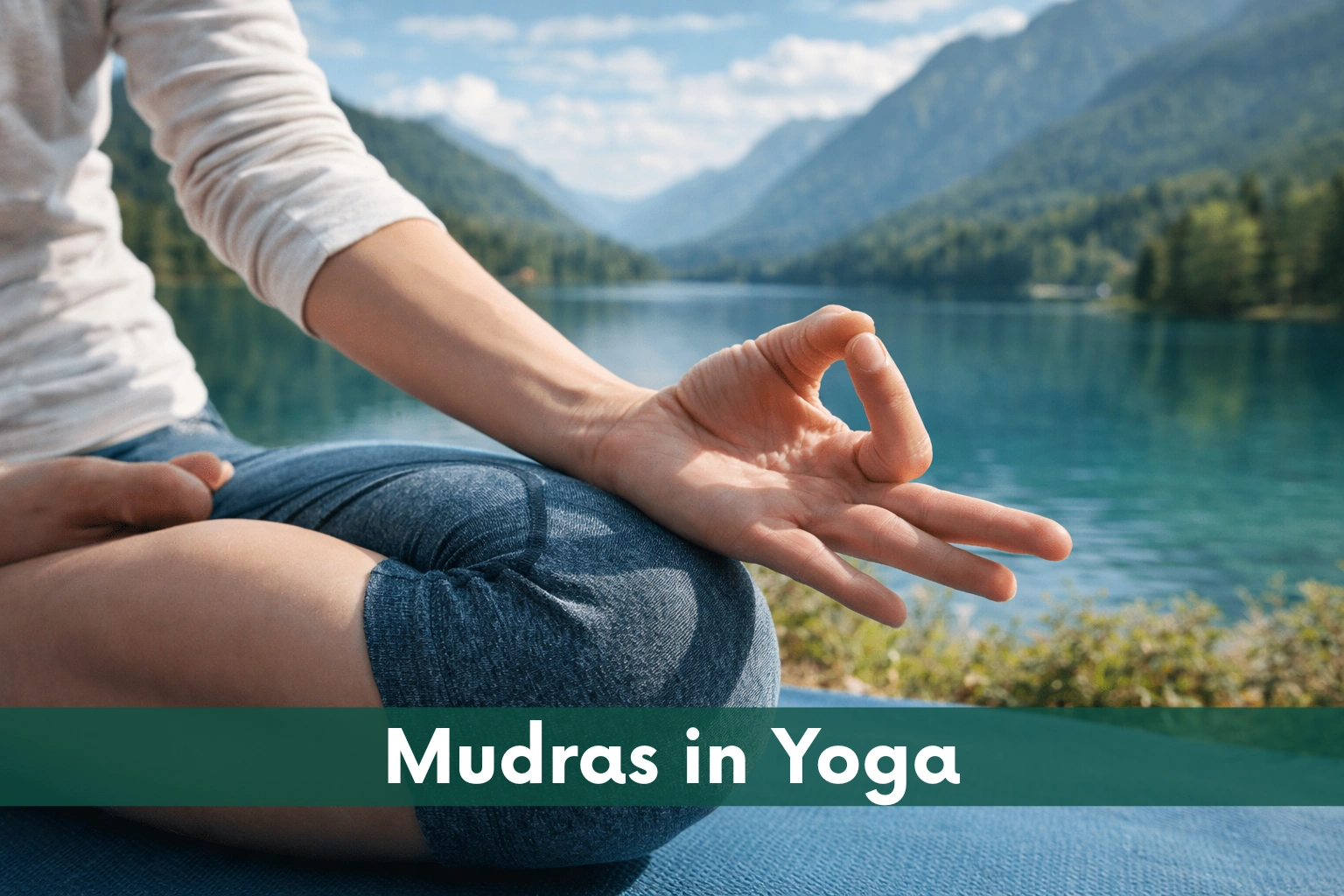
Chin Mudra is performed by gently touching the thumb and index finger together while resting the hands on the knees with the palms facing downward. This grounding yoga mudra helps retain and stabilise energy, making it ideal for meditation and mindfulness practices. By combining the fire element (thumb) with the air element (index finger), Chin Mudra is believed to balance Vata dosha, calm an overactive mind, improve concentration, and enhance inner awareness. Regular practice promotes mental clarity, emotional stability, and deeper focus.

3.Gyana (Jnana Mudra)
Gyana Mudra, also known as the Mudra of Wisdom, is one of the most widely practised hand gestures in yoga and meditation. It is formed by gently touching the tip of the thumb to the tip of the index finger while resting the hands on the knees with the palms facing upward. This powerful mudra enhances concentration, improves mental clarity, and deepens meditation. Commonly used during pranayama, Gyana Mudra also promotes inner awareness, mindfulness, and the free flow of positive energy throughout the body.

4. Vayu Mudra
Vayu Mudra is formed by bending the index finger to the base of the thumb and gently pressing it with the thumb. This powerful yoga mudra is designed to reduce the air (Vata) element in the body and should not be confused with Chin Mudra. Regular practice of Vayu Mudra may help relieve stress, anxiety, bloating, excess gas, joint discomfort, and certain Vata-related imbalances. It also promotes mental calmness, improves focus, and supports overall physical and emotional well-being.

5. Dhyana Mudra
Dhyana Mudra, also known as the Meditation or Concentration Mudra, is performed by placing the right hand over the left hand in the lap with the thumbs gently touching. This classic yoga mudra symbolises inner balance, mental stillness, and focused awareness. Widely associated with Lord Buddha, Dhyana Mudra is commonly practised during meditation to calm the mind, improve concentration, and encourage deep relaxation. Regular practice helps cultivate mindfulness, emotional balance, and a stronger connection between the mind, body, and spirit.

7 Healing Mudras for Chakra Balancing
Mudras are powerful yoga hand gestures that help balance the chakra system, the body’s seven primary energy centres. Located along the spine, each chakra influences specific physical, emotional, mental, and spiritual functions. When a chakra becomes blocked or imbalanced, it may contribute to stress, fatigue, emotional instability, or physical discomfort. Practising specific chakra mudras helps direct the flow of prana (life force energy), supporting chakra healing, activation, and overall well-being.
In yogic philosophy, each finger represents one of the five natural elements, which correspond to the first five chakras. By forming the appropriate mudra, you can restore elemental balance and encourage healthy energy flow throughout the body.
The seven chakras and their associated elements are:
- Root Chakra (Muladhara) – Earth
- Sacral Chakra (Svadhisthana) – Water
- Solar Plexus Chakra (Manipura) – Fire
- Heart Chakra (Anahata) – Air
- Throat Chakra (Vishuddha) – Ether (Space)
- Third Eye Chakra (Ajna) – Light and Intuition
- Crown Chakra (Sahasrara) – Consciousness and Divine Awareness
Regularly practising mudras for chakra healing can improve energy flow, enhance emotional balance, strengthen focus, and promote inner peace. Combined with yoga, meditation, and mindful breathing, these simple hand gestures can help align your chakras, restore harmony, and support your journey towards better physical, mental, and spiritual health.
1. Prithvi Mudra for the Root Chakra (Muladhara Chakra)
Prithvi Mudra, meaning “Earth Gesture” in Sanskrit, is a powerful yoga mudra used to balance the Root Chakra (Muladhara) and strengthen the earth element within the body. This grounding mudra promotes stability, inner strength, vitality, and emotional balance while supporting healthy digestion and overall well-being. To practise Prithvi Mudra, gently touch the tip of the ring finger to the thumb on each hand, keeping the remaining fingers extended and the palms facing upward during yoga or meditation.

2. Varun Mudra for the Sacral Chakra (Svadhishthana Chakra)
Varun Mudra, also known as the Water Gesture, is a beneficial yoga mudra that balances the Sacral Chakra (Svadhisthana) and supports healthy hydration. By increasing the body’s water element, it helps improve skin health, maintain joint flexibility, purify the blood, and promote overall vitality. This calming mudra may also ease emotional imbalances linked to the Sacral Chakra. To practise Varun Mudra, gently touch the tip of the little finger to the thumb, keeping the remaining fingers comfortably extended while meditating or practising pranayama.

3. Agni Mudra for the Solar Plexus Chakra (Manipura Chakra)
Agni Mudra, also known as the Fire Gesture, is a powerful yoga mudra that activates the Solar Plexus Chakra (Manipura) and strengthens the body’s digestive fire, or Agni. Regular practice supports healthy digestion, boosts metabolism, enhances confidence, and improves mental clarity. This energising mudra also helps awaken inner strength and personal power. To perform Agni Mudra, gently fold the ring finger into the palm and press it lightly with the base of the thumb, keeping the remaining fingers comfortably extended.

4. Vayu Mudra for the Heart Chakra (Anahata Chakra)
Vayu Mudra, meaning “Air Gesture,” is a powerful yoga mudra that helps balance the air element and support the Heart Chakra (Anahata). Regular practice may reduce restlessness, improve emotional stability, enhance self-awareness, and promote a sense of inner calm. It is also traditionally believed to help relieve excess gas, joint discomfort, and Vata-related imbalances. To perform Vayu Mudra, gently bend the index finger to the base of the thumb and lightly press it with the thumb while keeping the remaining fingers comfortably extended

5. Akash Mudra for the Throat Chakra (Vishuddha Chakra)
Akash Mudra, also known as Shuni Mudra, is a powerful yoga hand gesture that balances the space (ether) element and activates the Throat Chakra (Vishuddha). Regular practice is believed to improve communication, enhance intuition, promote inner awareness, and support mental clarity. In Ayurveda, it is also associated with maintaining healthy bones and overall well-being. To practise Akash Mudra, gently touch the tip of the middle finger to the thumb while keeping the remaining fingers comfortably extended during meditation or yoga.

6. Hakini Mudra for the Third Eye Chakra (Ajna Chakra)
Hakini Mudra, often called the Mudra of the Mind, is a powerful yoga hand gesture that activates the Third Eye Chakra (Ajna) and enhances mental clarity. Regular practice is believed to improve concentration, memory, creativity, and intuitive awareness while calming an overactive mind. To perform Hakini Mudra, gently bring the fingertips and thumbs of both hands together, leaving a small space between the palms. Focus on your breath or visualise a glowing light between your hands to deepen meditation and strengthen inner awareness.

7. Dhyana Mudra for the Crown Chakra (Sahasrara Chakra)
Dhyana Mudra, also known as the Meditation Mudra, is a traditional yoga hand gesture that promotes deep meditation, inner peace, and spiritual awareness. It is closely associated with activating the Crown Chakra (Sahasrara), encouraging mindfulness and a stronger connection with higher consciousness. To practise Dhyana Mudra, place your right hand over the left with both palms facing upward, then gently touch the tips of the thumbs together. This calming mudra enhances concentration, emotional balance, and overall mental well-being during meditation.

Final Thought
Mudras are simple yet powerful yoga hand gestures that help balance the body’s energy, improve focus, and support physical, mental, and spiritual well-being. Whether practised during yoga, meditation, or pranayama, these ancient techniques can enhance mindfulness, promote emotional harmony, and encourage overall wellness. By incorporating mudras into your daily routine, you can experience greater inner peace and a deeper connection with yourself.
At Amantrhit, we guide you through authentic yoga, meditation, and holistic wellness practices designed to transform your mind, body, and soul. Contact Amantrhit today to begin your journey towards better health, balance, and lasting inner harmony.
Frequently Asked Questions About Mudras in Yoga
1.What are mudras in yoga?
Mudras are symbolic hand gestures used in yoga and meditation to direct the flow of prana (life force energy). They help balance the body's energy, improve concentration, reduce stress, and support physical, mental, and spiritual well-being.
2. What are the benefits of practising mudras?
Regular practice of mudras may improve focus, reduce stress and anxiety, enhance meditation, balance the chakras, support better digestion, increase energy levels, and promote emotional stability.
3.Do mudras really work?
Mudras have been practised for centuries in yoga and Ayurveda. Many people report improved relaxation, concentration, and emotional balance. While scientific evidence is still evolving, mudras are widely used as a complementary wellness practice.
4. What is the best time to practise mudras?
Mudras can be practised at any time of the day. However, early morning during meditation or yoga is considered ideal because the mind is calm and more receptive.
5.Where can I learn authentic mudras and yoga practices?
At Amantrhit, experienced yoga instructors guide you through authentic mudras, meditation, pranayama, and holistic wellness practices designed to improve your physical health, mental clarity, and spiritual well-being. Contact Amantrhit to begin your journey towards a healthier, more balanced life.

Amantrhit Wellness Retreat Center
Amantrhit is an ISO and Yoga Alliance certified wellness retreat center in Rishikesh, offering Ayurveda, yoga, meditation, Panchakarma, weight loss retreats & other holistic healing programs. Amantrhit is a 5-star rated retreat center with several years of wellness experience, 100+ happy Guests, and 1000+ trusted wellness seekers worldwide. Whether you want to relax, heal, detox, or reconnect with yourself, Amantrhit provides a peaceful and supportive space to begin your wellness journey. Our experienced doctors and certified therapists guide guests. we also serve organic sattvik meals and serene surroundings restore balance to body, mind, and spirit. Come as you are, and leave feeling lighter, clearer, and deeply restored.


Leave a Reply