

Yoga for PCOS: 10 Poses for Hormonal Balance & Fertility Support
Polycystic Ovary Syndrome (PCOS) is one of the most common hormonal disorders affecting women of reproductive age, impacting an estimated 6–13% of women worldwide. Unfortunately, nearly 70% of cases remain undiagnosed, leaving many women to struggle with symptoms without proper treatment. PCOS can affect hormone levels, metabolism, menstrual health, and overall well-being, leading to issues such as irregular or missed periods, painful cramps, acne, excessive facial or body hair, weight gain, fatigue, mood swings, anxiety, and fertility challenges.
Although medications and hormone therapies can help manage certain symptoms, they may not address the root causes of PCOS and can sometimes cause unwanted side effects. Adopting healthy lifestyle habits alongside medical care is essential for long-term symptom management.
Practising yoga for PCOS is a natural and holistic way to support hormonal balance, reduce depression, improve blood circulation, and enhance reproductive health. Regular yoga practice can also help regulate menstrual cycles, improve insulin sensitivity, promote weight management, and support emotional well-being. Combined with a balanced diet and healthy lifestyle, yoga offers a sustainable approach to managing PCOS symptoms naturally.
In this guide, you’ll discover 10 science-backed yoga poses for PCOS, their health benefits, and practical tips for creating an effective daily yoga routine to support your hormonal and reproductive health.
How Yoga Helps with PCOS
Practising yoga for PCOS is a natural and effective way to manage the physical, hormonal, and emotional challenges associated with Polycystic Ovary Syndrome. By combining gentle postures, mindful breathing, and relaxation techniques, yoga supports overall well-being and complements medical treatment. Regular practice can help regulate hormones, improve metabolic health, and reduce stress, making it an excellent addition to a healthy lifestyle.
Hormonal Benefits
Yoga helps restore hormonal balance by reducing the body’s stress response and improving endocrine function.
- Lowers cortisol (the stress hormone), which can contribute to insulin resistance and hormonal imbalances.
- Improves insulin sensitivity, helping regulate blood sugar levels naturally.
- Supports the healthy balance of reproductive hormones, including estrogen and progesterone.
- Encourages regular menstrual cycles and promotes reproductive health.
Physical Benefits
Consistent yoga practice improves overall fitness while supporting common PCOS-related concerns.
- Assists with healthy weight management through gentle movement.
- Improves blood circulation to the pelvic and abdominal organs.
- Enhances digestion and helps reduce bloating and abdominal discomfort.
- Increases flexibility, strength, posture, and energy levels.
Mental and Emotional Benefits
PCOS can affect emotional well-being, and yoga provides a calming, restorative practice.
- Reduces stress, anxiety, and symptoms of depression through breathwork and meditation.
- Promotes mindfulness, emotional balance, and better sleep quality.
- Boosts confidence, body awareness, and self-esteem.
- Creates a sense of inner calm while supporting long-term physical and mental wellness.
When practiced regularly alongside a balanced diet and healthy lifestyle, yoga for PCOS can play a valuable role in managing symptoms naturally and improving overall quality of life.
10 Best Yoga Poses for PCOS Relief
Practising the right yoga for PCOS can help address some of the most common symptoms of Polycystic Ovary Syndrome, including hormonal imbalance, irregular menstrual cycles, stress, weight gain, and fertility concerns. These carefully selected yoga asanas for PCOS are beginner-friendly, easy to modify, and suitable for women of all fitness levels. By combining mindful movement with controlled breathing, these poses help improve blood circulation to the pelvic region, support healthy ovarian function, reduce stress hormones, and promote overall hormonal balance.
Regular practice can also enhance flexibility, strengthen the core and pelvic muscles, improve digestion, boost metabolism, and encourage relaxation. When combined with a healthy diet and lifestyle, these yoga poses can naturally support menstrual health, improve fertility, and reduce many of the physical and emotional symptoms associated with PCOS.
Below are 10 effective yoga poses for PCOS that can easily be incorporated into your daily wellness routine:
- Butterfly Pose (Baddha Konasana)
- Bow Pose (Dhanurasana)
- Garland Pose (Malasana)
- Legs Up the Wall Pose (Viparita Karani)
- Supported Bridge Pose (Setu Bandhasana)
- Locust Pose (Salabhasana)
- Child’s Pose (Balasana)
- Seated Forward Fold (Paschimottanasana)
- Cat-Cow Pose (Marjaryasana-Bitilasana)
- Cobra Pose (Bhujangasana)
1. Butterfly Pose (Baddha Konasana)
Butterfly Pose (Baddha Konasana) is one of the most effective yoga poses for PCOS, helping improve blood circulation to the pelvic region, stimulate the ovaries, and support hormonal balance. It also relieves tension in the hips and reproductive organs while promoting menstrual and reproductive health. Sit upright with your legs extended, bring the soles of your feet together, and gently lower your knees toward the floor. Hold your feet, lengthen your spine, and lean forward slightly if comfortable. Stay in the pose for 1–3 minutes. For added comfort, place yoga blocks or cushions under your knees or sit against a wall for extra back support.

2. Bow Pose (Dhanurasana)
Bow Pose (Dhanurasana) is a powerful yoga pose for PCOS that helps stimulate the endocrine glands, improve hormonal balance, and boost metabolism. It stretches the abdomen, chest, and hips while supporting digestion, adrenal function, and reproductive health. Lie on your stomach, bend your knees, and hold your ankles with your hands. Inhale as you lift your chest and legs off the floor, keeping your gaze forward and breathing steadily. Hold the pose for 15–30 seconds and repeat 2–3 times. If needed, use a yoga strap to reach your ankles or lift your chest slightly higher to reduce pressure on the lower back.

3. Garland Pose (Malasana)
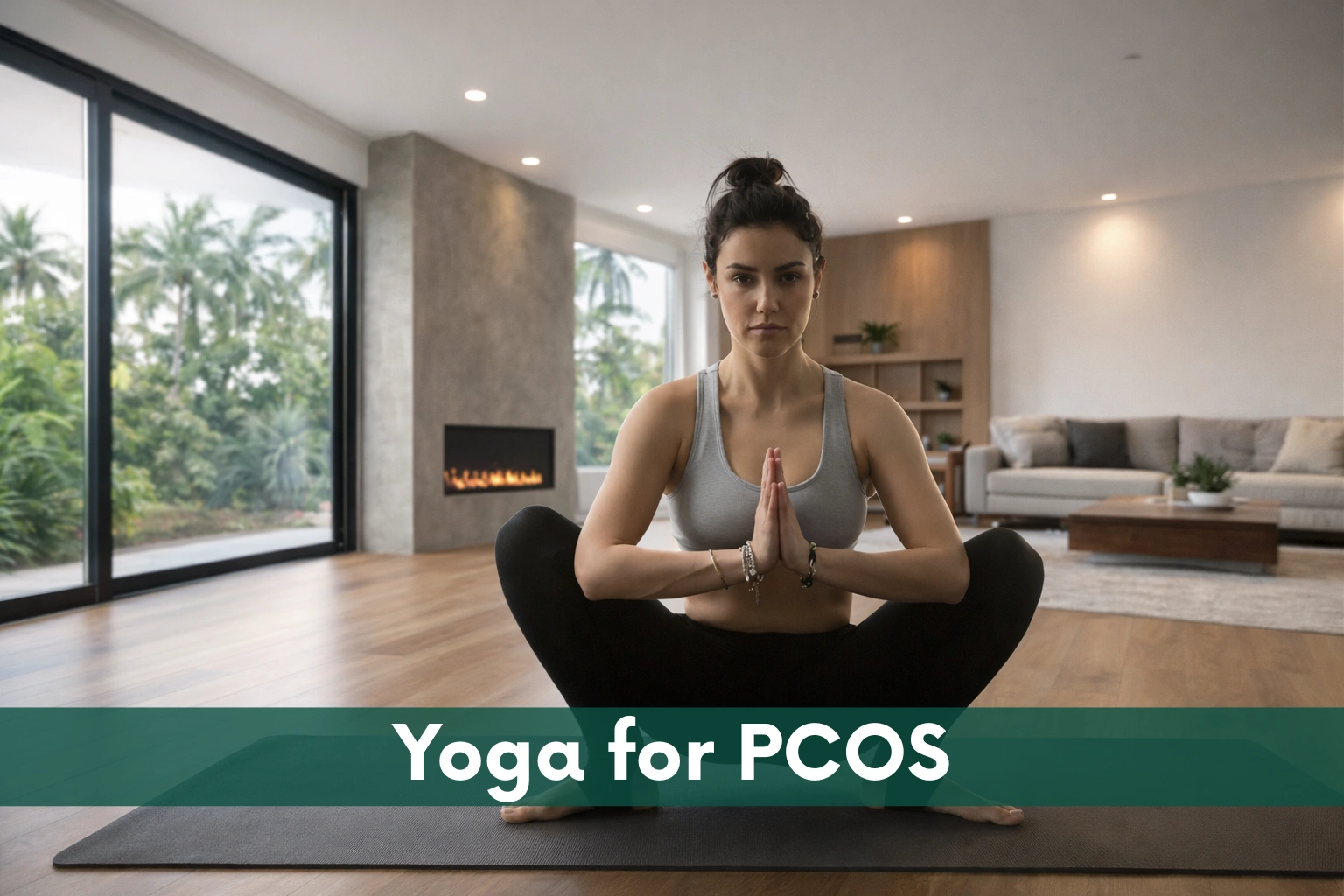
Garland Pose (Malasana) is an excellent yoga pose for PCOS that helps open the hips, stimulate the pelvic organs, and support hormonal and reproductive health. This grounding posture also improves digestion, encourages healthy bowel movements, and calms the nervous system, helping reduce stress associated with PCOS. Stand with your feet wider than hip-width apart, turn your toes slightly outward, and lower into a deep squat. Bring your palms together at your chest and gently press your elbows against your knees to deepen the stretch. Hold the pose for 1–2 minutes while breathing steadily. For extra support, sit on a yoga block or place a rolled towel under your heels if needed.

4. Legs Up the Wall (Viparita Karani)
Legs Up the Wall Pose (Viparita Karani) is a deeply restorative yoga pose for PCOS that promotes relaxation, improves blood circulation to the pelvic organs, and supports hormonal balance. This gentle inversion helps reduce stress, relieve lower body fatigue, and enhance reproductive health. Sit sideways against a wall, then gently swing your legs up as you lie back on a yoga mat. Position your hips close to or slightly away from the wall for comfort, and rest your arms by your sides with palms facing upward. Hold the pose for 3–5 minutes, taking slow, deep breaths. For extra comfort, place a bolster under your hips or support your neck with a folded blanket.

5. Supported Bridge Pose (Setu Bandhasana)
Supported Bridge Pose (Setu Bandha Sarvangasana) is a calming yoga pose for PCOS that improves blood circulation to the pelvic region, stimulates the reproductive glands, and supports hormonal balance. This gentle backbend also helps relieve stress, reduce anxiety, and promote deep relaxation. Lie on your back with your knees bent and feet hip-width apart. Lift your hips and place a yoga block, bolster, or cushion beneath your sacrum for support. Relax your body, breathe deeply, and hold the pose for 2–3 minutes. For a more active variation, lift your hips without support by engaging your glutes and thighs. Keep your arms relaxed by your sides or extend them overhead for a deeper stretch.

6. Locust Pose (Salabhasana)
Locust Pose (Salabhasana) is a highly beneficial yoga pose for PCOS that strengthens the lower back, core, and pelvic floor while improving blood circulation to the abdominal and reproductive organs. It also stimulates the thyroid and adrenal glands, helping support hormonal balance, metabolism, posture, and energy levels. Lie on your stomach with your legs extended and arms by your sides. Inhale as you lift your chest, arms, and legs off the floor, keeping your neck neutral and engaging your glutes and thighs. Hold for 20–30 seconds, breathing deeply, then slowly release. Repeat 2–3 times. Beginners can place their hands under their thighs or lift only the upper or lower body for easier variation.

7. Child’s Pose (Balasana)
Child’s Pose (Balasana) is a restorative yoga pose for PCOS that helps reduce stress, calm the nervous system, and support hormonal balance. By activating the body’s rest-and-digest response, it lowers cortisol levels, promotes adrenal health, and encourages deep relaxation. Kneel on the floor with your big toes touching and knees slightly apart, then sit back on your heels and gently fold your torso forward. Rest your forehead on the mat while extending your arms forward or alongside your body. Breathe deeply for 1–2 minutes, releasing tension with every exhale. For extra comfort, place a bolster under your torso or keep your knees closer together to support the lower back.

8. Seated Forward Fold (Paschimottanasana)
Seated Forward Fold (Paschimottanasana) is a soothing yoga pose for PCOS that supports digestion, stimulates the abdominal organs, and helps reduce stress and anxiety. This calming forward bend encourages mindfulness while improving flexibility in the spine and hamstrings. Sit with your legs extended straight in front of you, inhale to lengthen your spine, and exhale as you gently fold forward from the hips. Reach for your feet, ankles, or shins without straining, and hold the pose for 1–2 minutes while breathing deeply. Beginners can bend their knees slightly or use a yoga strap around their feet for added comfort and support.

9. Cat-Cow Pose (Marjaryasana-Bitilasana)
Cat-Cow Pose (Marjaryasana-Bitilasana) is a gentle and effective yoga pose for PCOS that improves spinal flexibility, stimulates digestion, and relieves tension in the lower back and abdominal muscles. This flowing movement also enhances blood circulation to the pelvic organs and promotes relaxation, helping support hormonal balance. Begin in a tabletop position with your hands under your shoulders and knees beneath your hips. Inhale as you arch your back, lifting your chest and tailbone into Cow Pose. Exhale as you round your spine, tuck your chin, and engage your core in Cat Pose. Repeat the sequence for 8–10 slow breaths, moving smoothly with your breath.

10. Cobra Pose (Bhujangasana)
Cobra Pose (Bhujangasana) is a beneficial yoga pose for PCOS that gently stretches the abdomen, stimulates the adrenal and thyroid glands, and supports hormonal balance. This backbend also improves blood circulation to the reproductive organs, boosts metabolism, and helps reduce stress by opening the chest and encouraging deep breathing. Lie on your stomach with your legs extended and the tops of your feet resting on the mat. Place your palms beneath your shoulders and slowly lift your chest while keeping your elbows slightly bent and shoulders relaxed. Hold the pose for 30–60 seconds, then gently lower down. Beginners can practise Sphinx Pose by resting on their forearms for a gentler variation. Regular practice helps improve physical health, emotional well-being, and supports natural PCOS management.

Conclusion
Practising yoga for PCOS is a natural and holistic way to support hormonal balance, improve reproductive health, and manage the physical and emotional symptoms of Polycystic Ovary Syndrome. Regular yoga helps reduce stress, enhance blood circulation, improve flexibility, regulate menstrual cycles, and promote overall well-being. When combined with a balanced diet and a healthy lifestyle, these yoga poses can help you take a proactive approach to managing PCOS naturally while improving your quality of life.
At Amantrhit, we offer expert-led yoga and wellness programs designed to support hormonal health, mindfulness, and long-term wellness. Contact Amantrhit today to begin your personalized wellness journey and discover how yoga can help you manage PCOS naturally, restore balance, and achieve a healthier, happier life.
Frequently Asked Questions About Yoga for PCOS
1.Can yoga help manage PCOS naturally?
Yes. Regular yoga for PCOS can help manage symptoms naturally by reducing stress, improving hormonal balance, increasing insulin sensitivity, supporting weight management, and promoting regular menstrual cycles. It works best when combined with a healthy diet and lifestyle.
2.Which yoga is best for PCOS?
Some of the best yoga poses for PCOS include:
- Butterfly Pose (Baddha Konasana)
- Bow Pose (Dhanurasana)
- Garland Pose (Malasana)
- Legs Up the Wall (Viparita Karani)
- Supported Bridge Pose
- Cobra Pose (Bhujangasana)
- Child's Pose (Balasana)
- Cat-Cow Pose
- Seated Forward Fold
- Locust Pose
3.Can yoga help regulate irregular periods caused by PCOS?
Yes. Practising yoga regularly may improve blood circulation, reduce stress hormones, and support hormonal balance, which can help regulate menstrual cycles over time.
4. Can yoga reduce stress and anxiety caused by PCOS?
Absolutely. Yoga combines movement, breathing exercises, and mindfulness to lower cortisol levels, improve sleep quality, reduce anxiety, and promote emotional well-being.
5.Should I practise yoga during my menstrual cycle if I have PCOS?
Gentle restorative poses and breathing exercises are generally safe during menstruation. However, it's best to avoid intense backbends or inversions if they cause discomfort and always listen to your body.
6.Can beginners practise yoga for PCOS at home?
Yes. Many yoga poses for PCOS can be practised safely at home with proper guidance. Beginners should focus on correct posture, controlled breathing, and gradual progression to avoid injury.
7.Are there any yoga poses women with PCOS should avoid?
Most yoga poses are safe when performed correctly. However, if you have chronic pain, injuries, or other medical conditions, consult a qualified yoga instructor or healthcare provider before attempting advanced postures.
8. Why choose Amantrhit for yoga and wellness?
Amantrhit offers expert-led yoga, meditation, Ayurveda, and holistic wellness programs designed to support hormonal balance, reproductive health, stress management, and overall well-being. Whether you're looking to manage PCOS naturally or improve your overall health, our personalised wellness programs can help you achieve lasting results. Contact Amantrhit today to begin your holistic wellness journey.

Amantrhit Wellness Retreat Center
Amantrhit is an ISO and Yoga Alliance certified wellness retreat center in Rishikesh, offering Ayurveda, yoga, meditation, Panchakarma, weight loss retreats & other holistic healing programs. Amantrhit is a 5-star rated retreat center with several years of wellness experience, 100+ happy Guests, and 1000+ trusted wellness seekers worldwide. Whether you want to relax, heal, detox, or reconnect with yourself, Amantrhit provides a peaceful and supportive space to begin your wellness journey. Our experienced doctors and certified therapists guide guests. we also serve organic sattvik meals and serene surroundings restore balance to body, mind, and spirit. Come as you are, and leave feeling lighter, clearer, and deeply restored.


Leave a Reply