

Soham Meditation: A Complete Guide to Inner Peace Through Breath Awareness
In today’s fast-paced world, millions of people are searching for a simple, natural way to calm the mind and reconnect with their true self. Soham meditation is one of the oldest and most powerful techniques for achieving this state of inner stillness. Rooted in ancient yogic and Vedantic traditions, this practice uses the rhythm of your own breath to guide you toward deep relaxation, self-awareness, and spiritual growth.
Unlike many meditation techniques that require complex postures, external tools, or years of training, this particular method is accessible to everyone, regardless of age, experience level, or physical ability. In this comprehensive guide, we’ll explore what this ancient breath-based practice is, how it works, the science and philosophy behind it, its many benefits, and a detailed step-by-step method so you can begin practicing it today.
By the end of this article, you’ll have a clear understanding of why this technique has remained relevant for thousands of years and how you can weave it into your daily life for lasting peace and clarity.
What Is Soham Meditation?
The word “Soham” (सोऽहम्) is a Sanskrit mantra that translates to “I am That” or “I am He/She.” It is considered a Hamsa mantra — one of the most natural mantras in existence because it mirrors the sound of our own breathing. When you inhale, the sound naturally resembles “So,” and when you exhale, it resembles “Ham.”
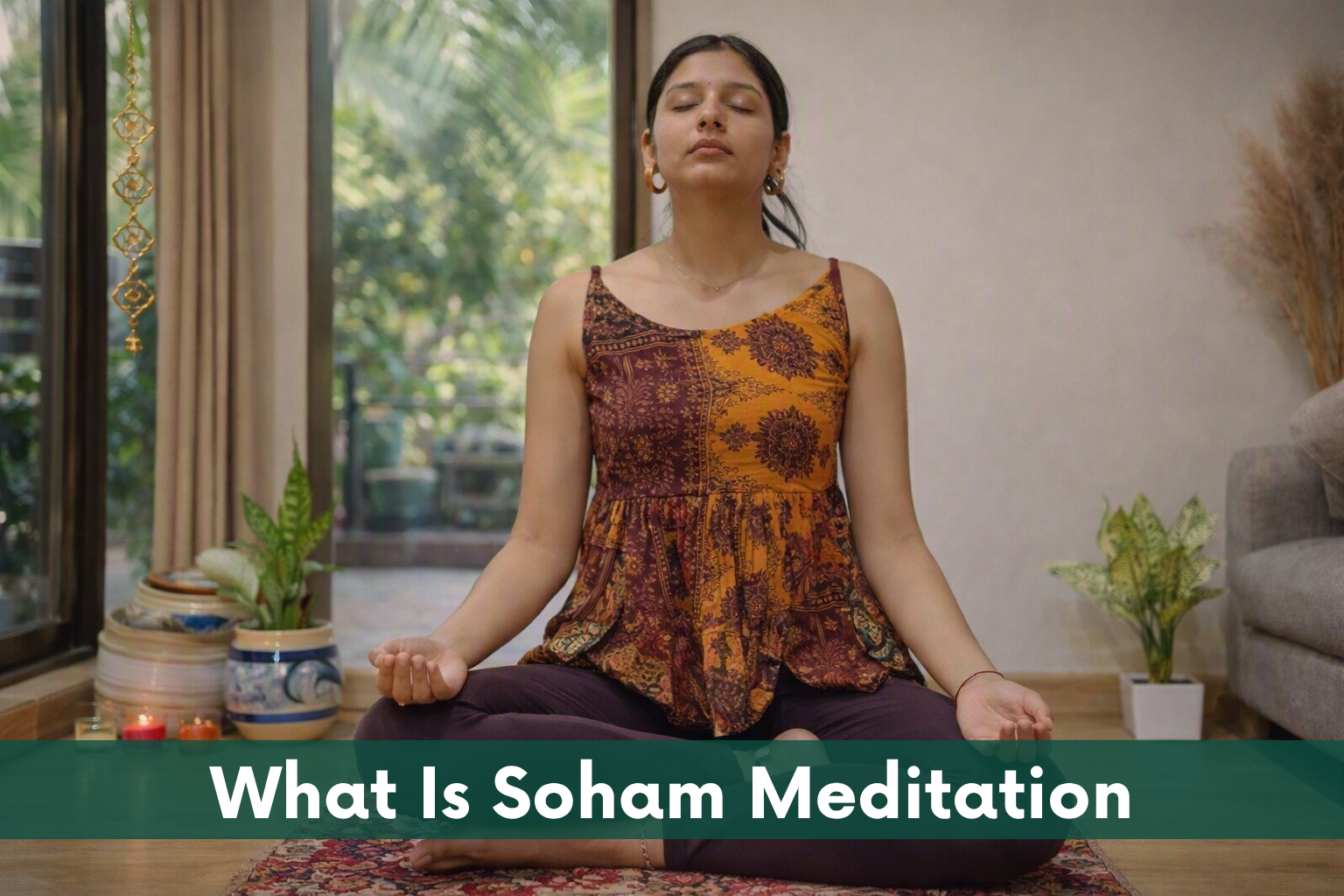
Soham meditation is the practice of silently repeating this mantra in sync with your natural breath. Rather than forcing the mind to focus on an external object, this technique draws attention inward, helping practitioners realize their connection to universal consciousness. In many spiritual traditions, this mantra is described as the “unspoken mantra” because every living being repeats it unconsciously with every breath, roughly 21,600 times a day.
This makes the practice fundamentally different from other mantra-based techniques — you are not introducing something foreign to the body or mind. Instead, you are simply becoming aware of a sound and rhythm that already exists within you, waiting to be noticed.
The Origins and Spiritual Significance
This form of meditation traces its roots back to ancient Vedic scriptures and the Upanishads, where sages explored the nature of the self (Atman) and its relationship with universal consciousness (Brahman). The mantra “Soham” encapsulates a core philosophical idea in Advaita Vedanta: that the individual soul and the supreme consciousness are not separate, but one and the same.
This practice was traditionally taught by gurus to students seeking self-realization, often passed down orally through generations of spiritual seekers. Over centuries, it has been embraced by various spiritual lineages, including Kriya Yoga and Kundalini Yoga, as a foundational technique for awakening inner awareness. Today, it continues to be practiced worldwide, not only for spiritual growth but also for its remarkable mental and physical health benefits, appealing to both religious practitioners and secular wellness seekers alike.
How Does Soham Meditation Work?
The mechanics of this technique are beautifully simple, which is part of why it has endured for so long. It works on the principle of anchoring the mind to the breath, which naturally slows down mental chatter and induces a meditative state. Here’s a breakdown of how the process unfolds:
- Breath as the Anchor
Since breathing is involuntary and continuous, it serves as a stable, ever-present point of focus. As you begin to observe your breath, the mind gradually stops wandering into past regrets or future anxieties, settling into the present moment.
- Mantra Synchronization
As you inhale, you mentally note “So,” and as you exhale, you mentally note “Ham.” This synchronization creates a rhythmic pattern that lulls the nervous system into a state of calm, much like a lullaby soothes a restless child.
- Dissolution of Ego-Identification
With consistent practice, the repetitive awareness of “I am That” helps dissolve the false identification with the body, thoughts, and emotions, allowing a deeper sense of unity and peace to emerge over time.
This is why the practice is often described as a bridge between ordinary awareness and higher consciousness—it uses something as basic and universal as breath to unlock profound spiritual insight.
Benefits of Soham Meditation
The benefits of this practice extend far beyond spiritual growth. Regular practitioners often report significant improvements in mental clarity, emotional stability, and physical health.
Mental and Emotional Benefits
- Reduces stress and anxiety: The rhythmic breathing pattern activates the parasympathetic nervous system, lowering cortisol levels and calming the fight-or-flight response.
- Improves focus and concentration: By training the mind to stay anchored to the breath, this practice enhances attention span and mental clarity over time.
- Promotes emotional balance: Practitioners often experience fewer mood swings and greater emotional resilience in the face of daily challenges.
- Encourages self-awareness: The introspective nature of this meditation helps individuals understand their thought patterns, triggers, and habitual reactions more clearly.
- Reduces overthinking: The continuous focus on breath and mantra gives the analytical mind a rest, quieting the inner chatter that often leads to rumination.
Physical Benefits
- Lowers blood pressure: Slow, controlled breathing has been linked in various studies to reduced hypertension and improved cardiovascular health.
- Improves sleep quality: A calm nervous system leads to deeper, more restorative sleep, making this an excellent practice before bedtime.
- Boosts immune function: Chronic stress weakens immunity, and consistent meditative practice helps counteract that effect by lowering systemic inflammation.
- Enhances respiratory efficiency: The focus on deep, mindful breathing improves lung capacity and oxygen exchange over time.
- Balances the nervous system: Regular practice helps regulate the autonomic nervous system, creating a healthier balance between activity and rest.
Spiritual Benefits
- Deepens self-realization: Practitioners often report a stronger sense of connection to their inner self and a clearer understanding of their true nature.
- Cultivates inner peace: The meditative state achieved through this practice creates lasting calmness that extends well into daily life, even outside of formal sessions.
- Supports spiritual awakening: Many long-term practitioners describe experiences of expanded awareness, unity consciousness, and a dissolving sense of separateness from the world around them.
Who Can Practice Soham Meditation?
One of the most appealing aspects of this technique is its universal accessibility. Whether you are a complete beginner or an experienced meditator, this practice can be seamlessly incorporated into your routine. It requires no special equipment, no prior training, no specific religious affiliation, and no dedicated meditation space — making it suitable for people from all walks of life who simply want to experience greater calm and clarity.
Because it relies solely on the breath, this practice is also ideal for people who struggle with traditional seated meditation or find it difficult to quiet a busy mind using visualization-based techniques. Students, working professionals, caregivers, and even elderly individuals with limited mobility can practice it comfortably.
Step-by-Step Guide to Practicing Soham Meditation
If you’re ready to begin your practice, follow these simple steps carefully and without rushing.
Step 1: Find a Quiet Space
Choose a peaceful location where you won’t be disturbed for at least 10 to 20 minutes. Sit comfortably on a chair or cushion with your spine straight but relaxed, allowing your body to settle naturally.
Step 2: Close Your Eyes and Settle In
Gently close your eyes and take a few natural breaths to settle your body and mind. Allow your shoulders to drop, your forehead to soften, and your jaw to relax completely.
Step 3: Observe Your Natural Breath
Without changing or controlling your breathing, simply observe the natural inhalation and exhalation. Notice the sensation of air entering and leaving your nostrils, and the gentle rise and fall of your chest or belly.
Step 4: Introduce the Mantra
As you inhale, silently think “So.” As you exhale, silently think “Ham.” Continue this pattern, allowing the mantra to blend seamlessly and effortlessly with your natural breath, without forcing the rhythm.
Step 5: Maintain Gentle Awareness
If your mind wanders — and it will, especially at first — gently and without judgment bring your attention back to the breath and the mantra. This return to focus is itself part of the practice, not a failure of it.
Step 6: Practice for 10-20 Minutes
Begin with shorter sessions of 10 minutes and gradually increase the duration as your focus and comfort improve. Consistency matters far more than the length of any single session.
Step 7: Close the Practice Mindfully
When you’re ready to finish, take a few deep breaths, gently open your eyes, and take a moment of stillness before returning to your daily activities.
Tips to Deepen Your Practice
To get the most out of your sessions, consider the following tips:
- Practice at the same time daily: Early morning or before bed are ideal times, as the mind is naturally quieter and less reactive during these windows.
- Maintain a comfortable posture: A straight spine allows for smoother, uninterrupted breathing and better energy flow throughout the body.
- Avoid forcing the breath: Let your breathing remain natural rather than deliberately slowing or deepening it, especially in the early stages of practice.
- Be patient with distractions: It’s completely normal for thoughts to arise repeatedly. Simply return to the mantra without frustration or self-criticism.
- Combine with journaling: Reflecting briefly on your experience after each session can deepen self-awareness and help track your progress over time.
- Start small and build gradually: Even five minutes of consistent daily practice is more valuable than an occasional hour-long session.
Common Mistakes to Avoid Practicing Soham Meditation
Many beginners unintentionally make their practice more difficult than it needs to be. Here are a few common pitfalls to watch out for:
- Trying too hard to control the breath — This practice is about awareness and observation, not manipulation or forced breathing patterns.
- Expecting instant results — Like any meditation practice, benefits build gradually with consistent, patient effort over weeks and months.
- Getting frustrated with a wandering mind — This is completely normal and expected; gentle redirection back to the breath is a core part of the process.
- Skipping regular practice — Consistency, even in short daily sessions, yields far better long-term results than infrequent, longer sessions.
- Judging your progress too harshly — Spiritual and mental growth through meditation is subtle and cumulative, not always immediately visible.
How This Practice Compares to Other Meditation Techniques
While there are many meditation styles available today, this particular breath-based technique stands out because of its simplicity and its direct, built-in link to the breath. Unlike visualization-based meditations that require mental imagery, or mindfulness practices that involve observing thoughts without a specific anchor, this technique offers a natural focal point — the breath itself paired with an equally natural sound.
This makes it particularly effective for beginners who often struggle to quiet a restless mind, as well as for advanced practitioners seeking to deepen their spiritual practice through mantra-based awareness and self-inquiry.
Final Thoughts
This ancient practice offers a profound yet remarkably simple path to inner peace, self-discovery, and spiritual awakening. By tuning into the natural rhythm of your breath and silently repeating the mantra “Soham,” you can cultivate a deep sense of calm that extends far beyond your meditation cushion and into every corner of your daily life.
Whether your goal is stress relief, better focus, improved sleep, or a deeper connection with your true self, soham meditation provides a timeless tool that fits effortlessly into modern life. Start with just a few minutes each day, stay consistent, and allow the transformative power of this simple yet profound technique to unfold naturally within you, one breath at a time.
Frequently Asked Questions About Soham Meditation
1.What does "Soham" actually mean?
Soham is a Sanskrit term meaning "I am That." It reflects the idea that the individual self is not separate from universal consciousness, and it naturally mirrors the sound of your own inhale and exhale.
2.How is this different from regular breathing exercises?
Regular breathing exercises usually focus on controlling or altering the breath, such as slowing it down or holding it. This practice, on the other hand, involves simply observing the natural breath while silently pairing it with the mantra, without trying to change its pace or depth.
3.How long should a beginner practice each day?
Beginners can start with just 10 minutes a day and gradually increase to 20–30 minutes as focus and comfort improve. Consistency is more important than duration, so a short daily session is better than an occasional long one.
4.Can this be practiced by people who are not religious or spiritual?
Yes. While it has spiritual roots in Vedantic philosophy, the technique works purely through breath awareness, making it equally effective as a secular relaxation and focus tool for anyone, regardless of belief system.
5.Is it normal for the mind to wander during practice?
Absolutely. A wandering mind is a normal part of any meditative process. The practice itself involves gently noticing when attention has drifted and softly returning to the breath and mantra, without judgment or frustration.
6.What is the best time of day to practice?
Early morning, right after waking, and late evening, before bed, are considered ideal because the mind tends to be quieter and less reactive during these windows. However, any consistent time that fits your schedule will work.
7. Do I need to sit in a specific posture to practice?
No special posture is required. Sitting comfortably with a relatively straight spine, whether on a chair, cushion, or floor, is sufficient. The key is comfort and stability, not a particular yogic position.

Amantrhit Wellness Retreat Center
Amantrhit is an ISO and Yoga Alliance certified wellness retreat center in Rishikesh, offering Ayurveda, yoga, meditation, Panchakarma, weight loss retreats & other holistic healing programs. Amantrhit is a 5-star rated retreat center with several years of wellness experience, 100+ happy Guests, and 1000+ trusted wellness seekers worldwide. Whether you want to relax, heal, detox, or reconnect with yourself, Amantrhit provides a peaceful and supportive space to begin your wellness journey. Our experienced doctors and certified therapists guide guests. we also serve organic sattvik meals and serene surroundings restore balance to body, mind, and spirit. Come as you are, and leave feeling lighter, clearer, and deeply restored.


Leave a Reply